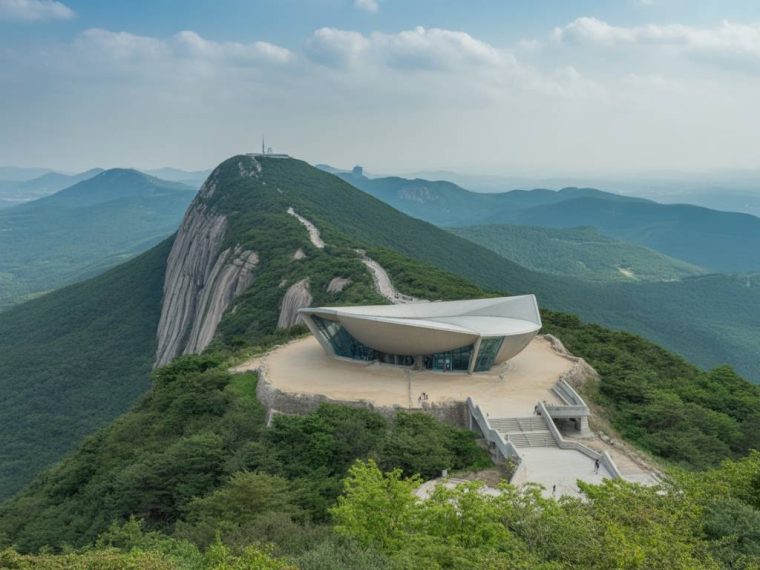
Twenty kilometres south of Seoul, where the subway line quietly trades glass towers for quilted green hills, lies one of South Korea’s most underrated cities. Gwacheon is not on every traveller’s radar — and that is precisely the point. What it lacks in neon glamour, it more than compensates for with world-class museums, mountain trails laced with Buddhist history, and a pace of life that genuinely lets you exhale. If you are planning a trip to the Seoul Capital Area and want a day (or more) away from the crowds, Gwacheon, South Korea belongs at the top of your list.
Why Gwacheon South Korea Deserves a Spot on Your Itinerary
Gwacheon sits within Gyeonggi Province, bordered by the granite ridges of Gwanaksan to the west and Cheonggyesan to the east. With a population of just over 60,000, it functions almost as a curated green buffer between the capital and the quieter countryside beyond. The city was purpose-built in the 1980s to decentralise government functions from Seoul, which means its infrastructure is clean, walkable, and surprisingly well-connected. For travellers, that translates into ease: great public transport, wide pedestrian paths, and cultural institutions clustered close enough to explore on foot or by bike.
- Distance from Seoul: approx. 20 km south of central Seoul
- Getting there: Seoul Subway Line 4 — alight at Gwacheon Station or Seoul Grand Park Station (journey time roughly 35–45 minutes from central Seoul)
- Best seasons: Late March to April (cherry blossom season) and late October to early November (autumn foliage)
- Ideal for: Families, solo travellers, art lovers, hikers, and anyone needing a restorative break from big-city energy
Museums in Gwacheon: A Cultural Landscape Like No Other
Gwacheon punches well above its weight when it comes to cultural infrastructure. Within a compact area, you will find three major national institutions, each distinct enough to fill an entire day on its own.
National Museum of Modern and Contemporary Art (MMCA Gwacheon)
Opened in 1986, the MMCA Gwacheon branch was the first of what would become a network of four MMCA locations across South Korea. Set against the wooded slopes of Cheonggyesan, the building itself — with its circular central hall, open courtyards, and tiered garden terraces — is an architectural statement about the relationship between art and landscape. Inside, the permanent collection spans Korean modern and contemporary art from the early 20th century to the present, alongside significant international works. Temporary exhibitions rotate frequently, so repeat visits rarely feel repetitive.
The outdoor sculpture garden is not to be skipped: monumental works by Korean and international artists are placed among pine trees and stone paths, blurring the boundary between gallery and forest. Entry fees are low (typically 2,000–4,000 KRW depending on the exhibition), and the museum is free on the last Wednesday of each month.
Gwacheon National Science Museum
One of the largest science museums in Asia, the Gwacheon National Science Museum covers over 55,000 square metres of exhibition space. It is ostensibly a family destination, but the depth of its content rewards curious adult visitors equally well. Highlights include:
- An immersive Planetarium with dome screenings covering everything from black holes to the Korean night sky
- Interactive exhibits on robotics, biotechnology, earth science, and space exploration
- An outdoor science playground and natural history hall featuring life-size dinosaur models
- A traditional science section dedicated to Korea’s historic inventions, including the turtle ship and early astronomical instruments
Admission is around 4,000 KRW for adults. Plan for at least three hours; most families spend a full day here.
Seoul Horse Racing Park
A quieter cultural curiosity, the Seoul Horse Racing Park (operated by KRA) offers weekend race meetings that attract local families and enthusiasts alike. It is not a typical tourist stop, but an afternoon here offers a genuine window into everyday Korean leisure culture — grandstands buzzing with commentary, vendors selling odeng (fish cake skewers), and animated debates over the form guide. Entry is just 800 KRW.
Nature and Hiking: Gwacheon’s Mountain Soul
The mountains flanking Gwacheon are not a backdrop — they are central to the city’s identity. Both Gwanaksan and Cheonggyesan are designated natural parks, with well-maintained trail networks used daily by locals of all ages.
Gwanaksan Provincial Park
Gwanaksan (629 m) is the more dramatic of the two, its rocky upper ridges offering sweeping views over southern Seoul and the Han River plain. The main trail from Gwacheon takes roughly 2.5 to 3 hours to the summit at a steady pace. Along the way, you pass Yeonjuam Hermitage, a small Buddhist sanctuary carved into the cliff face where incense smoke drifts permanently into the pine-scented air. The descent via the eastern flank brings you back through cool ravines where small waterfalls run after rain.
Cheonggyesan Provincial Park
Cheonggyesan (618 m) offers a gentler, more forested experience. The trails here wind through dense mixed woodland, passing streams, stone bridges, and the occasional traditional teahouse. The Mogwonsa Temple trailhead is the most popular starting point, and the route to the Maebong peak (582 m) is manageable for most walkers in moderate fitness. Autumn is spectacular here: the maple canopy turns deep crimson and gold, and the forest floor carpets itself in fallen leaves.
- Trail difficulty: Easy to moderate (Cheonggyesan) / Moderate to challenging (Gwanaksan)
- What to bring: Sturdy walking shoes, water, and layers — mountain temperatures drop quickly, even in spring
- Tip: Start early on weekends to avoid trail congestion near the trailheads
Things to Do in Gwacheon Beyond Museums and Trails
Seoul Grand Park
Seoul Grand Park, accessed directly from Seoul Grand Park Station, is one of the largest urban parks in Asia at over 9 km² in total area. It contains the Seoul Zoo (home to more than 3,000 animals across 330 species), the expansive Seoul Botanic Garden, a large lake suitable for paddle-boating, and a cable car that glides above the treetops between the park entrance and the MMCA. The zoo maintains relatively progressive standards for a public facility, with ongoing habitat improvement projects and active breeding programmes for endangered Korean species such as the Amur leopard.
Spring visits are elevated by rows of cherry and magnolia trees lining the main avenue, while autumn brings a quieter, more reflective beauty to the lakeside paths.
Gwacheon City Hall Area and Local Dining
The streets around Gwacheon Station and City Hall make for a pleasant evening wander. This is resolutely local territory: handwritten menus in the windows of small restaurants, pojangmacha (street food stalls) serving tteokbokki and odeng, and bakeries where the scent of red bean pastries spills onto the pavement. Look out for:
- Sujebi: hand-torn noodle soup, thick and warming — a staple of Gwacheon’s traditional eateries
- Kimchi jjigae: fermented kimchi stew, often simmered for hours in family-run restaurants that have barely changed their recipes in decades
- Walnut cakes (호두과자): a popular Korean street snack, fresh from roadside vendors near the park entrances
Practical Tips for Visiting Gwacheon, South Korea
- How to get there: Take Seoul Subway Line 4 southbound. Gwacheon Station serves the city centre and racecourse; Seoul Grand Park Station serves the park, zoo, and MMCA. Both are clearly signposted in English.
- How long to spend: A single full day is enough for one museum plus hiking or the park. Two days allows you to cover all the main highlights at a relaxed pace.
- Entry costs: Most attractions charge between 2,000 and 5,000 KRW (approximately £1.20–£3.00). Gwacheon is exceptionally affordable even by Korean standards.
- Weekday vs weekend: Weekdays are markedly quieter, especially on trails and at the science museum. Seoul Grand Park is busiest on Sunday afternoons.
- Accessibility: The main cultural sites and park areas are well-adapted for wheelchair users and families with pushchairs.
Gwacheon, South Korea rewards the traveller who slows down long enough to notice it. Between world-class contemporary art, mountain trails that have been walked by monks for centuries, and a science museum that genuinely sparks wonder in visitors of any age, the city offers a kind of depth that its modest profile does not advertise. It is a place that does not compete with Seoul — it simply offers something Seoul cannot: room to breathe, space to think, and a quiet insistence that remarkable things are often found just off the main road.