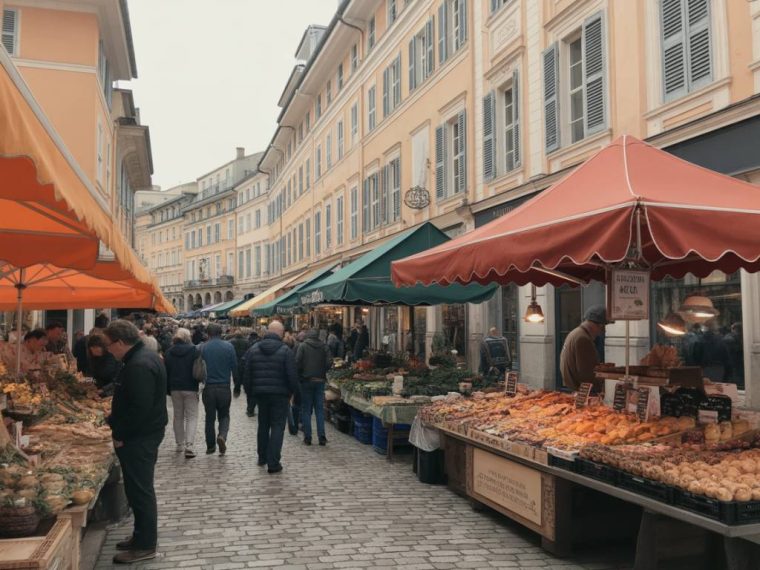
The Revival of Europe’s Traditional Food Markets
Across Europe, traditional food markets are quietly redefining how people eat, shop and travel. Some are centuries old. Others are newly revitalised halls housed in industrial-era buildings. All share the same core idea. Fresh, local and seasonal food, sold face to face, in spaces that feel alive.
In an era of supermarket chains and global supply, these markets may seem like relics of another time. They are not. Many are now at the forefront of the sustainable food movement. They support small producers. They shorten supply chains. They reduce packaging. And they provide travellers with a direct window into local culture, agriculture and daily life.
Why Traditional Markets Matter for Sustainable Travel
For visitors looking beyond postcard views, food markets offer something more grounded. They show how a region feeds itself. They show which crops thrive in local soils and climates. They also reveal how communities adapt to environmental and economic pressures.
Buying in a traditional market supports sustainability in several ways:
Travellers who choose to spend part of their budget in these places are not only eating better food. They are also participating, however briefly, in a more circular and place-based food economy.
France: Markets as Weekly Ritual
In France, open-air markets are as much social ritual as commercial space. Many towns still revolve around one or two weekly market days. People come early. Stalls fill streets and squares. There is noise, bargaining, and a lot of tasting.
In Provence, the markets of Aix-en-Provence or L’Isle-sur-la-Sorgue highlight regional abundance. Early summer brings fragrant Cavaillon melons. Autumn offers wild mushrooms and new olive oil. Producers often come from nearby villages, sometimes from the same land their families have farmed for generations. Their knowledge is specific and practical. Which goat’s cheese is best for baking. Which tomato variety holds its shape in a long stew. Which herbs are wild-picked rather than cultivated.
In Paris, historic covered markets such as Marché des Enfants Rouges show another side. Smaller than a supermarket but dense with flavour, they combine basic produce stalls with ready-to-eat dishes. Travellers can sample North African couscous, organic crêpes or slow-cooked stews made from market vegetables. For those seeking to bring a piece of this experience home, compact reusable produce bags, folding market baskets and French-style linen bread bags are easy practical purchases. They make it simpler to shop with less plastic, wherever you live.
Spain: Market Halls Moving Beyond Tourism
Spain’s great market halls were once strictly utilitarian. Today, some have become tourist destinations in their own right. The risk is that they turn into food courts. The reality is more complex.
In Barcelona, La Boqueria is famous and crowded. Yet, if you arrive early, you still find elderly locals choosing cuttlefish and greens for sofregit, and chefs sourcing seafood for the day’s menu. Many stalls proudly display seasonal Catalan produce. Artichokes from nearby fields. Calçots in winter. Local almonds and hazelnuts. A newer generation of stallholders integrates organic farming and zero-waste concepts. They use minimal plastic and offer discounts for refillable containers.
Elsewhere in Spain, markets like Mercado de la Ribera in Bilbao or Mercado Central in Valencia retain a more everyday rhythm. They concentrate regional specialities: Basque cheeses and line-caught fish in one, citrus fruit and rice for paella in the other. For visitors, guided market tours and cooking classes are increasingly common. They can be useful tools. A good guide will introduce you to producers, explain labels such as denominación de origen and highlight which stalls prioritise sustainable fishing or organic farming.
Italy: Slow Food in Practice
Italy’s food markets often overlap with the philosophy of the Slow Food movement, which was born in Piedmont. Many Italian towns host weekly or even daily markets where direct relationships between producer and buyer still dominate.
In Turin’s Porta Palazzo, one of Europe’s largest open-air markets, the scale is impressive. Yet, the structure remains simple. Farmers arrive at dawn with vegetables, fruit, cheese and cured meats. Prices can be modest, especially if you shop towards closing time. More importantly, much of the produce is local to Piedmont. Hazelnuts, cardoons, bitter greens and regionally milled flour appear in season. You see how geography shapes cuisine.
In smaller cities such as Bologna, Modena or Florence, covered markets like Mercato di San Lorenzo or Mercato delle Erbe offer a more intimate experience. Organic and biodynamic farmers’ stalls are often mixed with long-established family shops. Butcher counters specialise in lesser-known cuts, reflecting a nose-to-tail approach that is both cultural and sustainable. Cheese stands showcase raw-milk varieties from mountain pastures, where extensive grazing helps maintain landscapes and biodiversity.
For travellers who enjoy cooking, these markets are ideal places to source regional staples to take home: dried porcini mushrooms, heritage wheat pasta, or extra-virgin olive oil from small estates. Compact, shelf-stable and high in value, they travel well. When choosing, look for clear origin labelling, cooperative brands and certifications that support small-scale agriculture rather than industrial-scale production.
Central Europe: Farmers’ Markets and Urban Renewal
Across Central Europe, the revival of traditional markets intersects with urban regeneration. Old market halls, once neglected, are being restored and filled with a mix of farmers, bakers, roasters and small food startups.
In Budapest, the Great Market Hall (Nagycsarnok) combines regional produce with paprika vendors, Tokaji wine stands and cured meat counters. It also reflects current tensions. The upper floor can feel tourist-focused. The ground level still serves locals. Many stalls source directly from Hungarian farms and small processors. They carry seasonal fruit from the Great Plain and vegetables from the Danube Bend. This dual role highlights a broader trend. Markets must balance visitor appeal with their fundamental function as everyday food hubs.
Smaller farmers’ markets in cities like Prague, Vienna or Kraków are moving further towards sustainability. In Vienna, the Naschmarkt has long been a reference point. In recent years, satellite farmers’ markets have emerged in residential districts, selling organic bread, pastured meats and raw-milk cheese. These newer venues often enforce strict rules on origin and production methods. No re-sellers. No imported produce when a local equivalent is in season.
Here, reusable shopping kits become more than a travel accessory. A lightweight cotton bag, a couple of glass or stainless-steel containers, and a collapsible cup make it easier to buy loose produce, deli items and drinks without relying on single-use plastic. Many travellers now pack these as standard gear, much like a refillable water bottle.
Northern Europe: Design, Traceability and Ethics
In Scandinavia and parts of Northern Europe, food markets often combine minimalist design with a high level of traceability. The emphasis is less on theatrical bustle, more on clarity. Labels are precise. Origin is documented. Certifications are common.
In Copenhagen, Torvehallerne illustrates this approach. Two glass-and-steel halls house a mix of greengrocers, fishmongers, coffee roasters and speciality food vendors. Many stalls highlight organic certification, sustainable fishing practices and full farm-to-counter traceability. Prices can be high. The offer is carefully curated. For travellers, it provides a compact overview of contemporary Nordic food, where local, seasonal and ethical sourcing are priorities rather than afterthoughts.
In Helsinki, the Old Market Hall and regional markets around the Baltic showcase smoked fish, wild berries and mushrooms. Foraged products have become particularly significant. They rely on intact ecosystems. They also reflect a deeper cultural relationship with forests and lakes. Some stalls now specialise in certified organic or sustainably harvested wild foods, with information on picking zones and preservation methods.
How to Shop Responsibly as a Visitor
Engaging with traditional food markets as a traveller involves more than taking photographs or buying a quick snack. It is an opportunity to make small but meaningful choices.
For those who like to integrate travel habits into daily life, a few simple products can help. A durable market basket or foldable crate for weekly shopping. A set of cloth produce bags for fruit, vegetables and bread. An insulated bottle and a compact cutlery kit for street food. These items, now widely available online and in eco-focused shops, extend the spirit of European markets into everyday routines back home.
Markets as Living Maps of Place
Traditional food markets vary wildly in atmosphere. Some are chaotic. Others are quiet. Some stretch through entire neighbourhoods. Others fit into a single hall. Yet, they share one important feature. Each is a living map of its region’s resources, skills and tastes.
When travellers move through these spaces attentively, they gain more than a meal. They learn how coastal towns rely on small-scale fisheries. How mountain villages depend on hardy livestock breeds and long-keeping vegetables. How city dwellers negotiate limited space through rooftop gardens, urban greenhouses and cooperative buying groups that show up in market stalls.
In this sense, choosing where and how to shop during a trip becomes part of the experience itself. Markets are not just backdrops for photographs. They are active laboratories of local, sustainable produce. They connect visitors to the people and landscapes that feed Europe, one stall at a time.