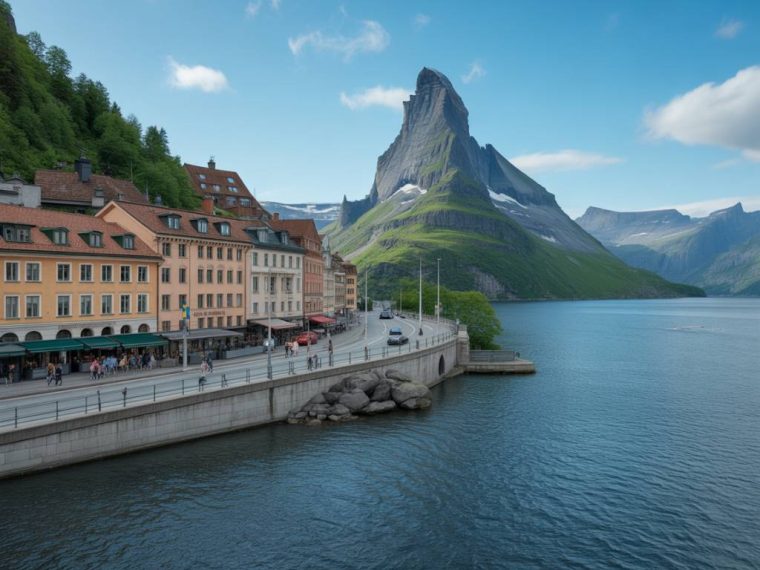
Two countries. Both breathtakingly beautiful, both famously efficient, and both sitting firmly at the top of European bucket lists. But when you’re planning your next trip and find yourself torn between Sweden and Switzerland, the choice is anything but obvious. From Arctic wilderness to Alpine peaks, Nordic minimalism to multilingual elegance — this guide breaks down exactly what each destination offers so you can pick the one that truly speaks to you.
Sweden or Switzerland: How Their Landscapes Compare
Nature is the headline act in both countries, but the performances couldn’t be more different.
Sweden: Wild, vast, and endlessly open
Sweden is built for those who want to feel small in the best possible way. The country spans over 450,000 km², with roughly 70% covered in forest. Key natural highlights include:
- Abisko National Park — one of the world’s best spots to witness the Northern Lights between November and March
- The Stockholm Archipelago — over 30,000 islands scattered across the Baltic Sea, ideal for kayaking and sailing
- The Kungsleden Trail — a 440 km long-distance hiking route through Lapland’s untouched subarctic landscape
- Midnight sun in summer — above the Arctic Circle, daylight stretches past midnight from late May to July
Switzerland: Alpine drama, precision-perfect
Switzerland packs extraordinary natural diversity into a country smaller than the Netherlands. Its mountains dominate — the Alps cover nearly two-thirds of the territory. Must-see natural landmarks include:
- The Matterhorn — arguably the most iconic mountain silhouette in the world, best viewed from Zermatt
- Lake Geneva and Lake Lucerne — mirror-still waters framed by mountains and vine-covered hillsides
- Aletsch Glacier — the largest glacier in the Alps and a UNESCO World Heritage Site
- The Glacier Express route — a panoramic rail journey connecting Zermatt to St. Moritz across 291 bridges
Verdict: If you crave raw wilderness and solitude, Sweden wins. If dramatic, photogenic scenery and easy mountain access are your priorities, Switzerland takes the crown.
Sweden or Switzerland: Culture, Cities and Local Life
Swedish culture: Quiet depth and Nordic cool
Swedish society is shaped by concepts that are genuinely lived, not just talked about. Lagom (the art of just the right amount) and fika (a ritual coffee break shared with others) reflect a culture that values balance, community, and slow living. City highlights include:
- Stockholm’s Gamla Stan — a medieval old town of cobbled alleys, 13th-century buildings, and the Royal Palace
- Gothenburg — a laid-back city with a world-class food scene and easy access to the West Coast islands
- Malmö — a forward-thinking city known for bold architecture, sustainability, and multicultural energy
Swiss culture: Multilingual, precise, and quietly grand
Switzerland is four cultures in one compact country. Depending on the region, you’ll encounter a completely different language, cuisine, and atmosphere. This cultural mosaic makes it feel like three distinct trips rolled into one:
- Zurich (German-speaking) — a global financial hub with a thriving arts scene and pristine lakeside promenades
- Geneva (French-speaking) — home to the UN and the Red Cross, with a cosmopolitan, polished character
- Lugano (Italian-speaking) — Mediterranean warmth meets Swiss order, on the shores of Lake Lugano
- Bern (bilingual capital) — a UNESCO-listed medieval old town where the 13th-century Zytglogge clock tower still marks every hour
Verdict: Sweden offers a more cohesive, quietly intimate cultural experience. Switzerland delivers variety and richness, best for travellers who want several cultural flavours in a single trip.
Food and Drink: Smörgåsbord vs. Fondue
Both countries take their food seriously — just in very different registers.
Swedish cuisine is honest and grounded in nature: pickled herring, gravlax, crispbread, meatballs with lingonberry, and the iconic kanelbullar (cinnamon buns). Fika culture means cafés are warm, welcoming spaces — not just places to grab a coffee and go.
Swiss cuisine is comfort food elevated. Fondue and raclette are must-tries, best enjoyed in an Alpine hut with snow falling outside. Rösti, a crispy potato dish from the German-speaking region, is a staple. And Swiss chocolate — Lindt, Toblerone, Läderach — sets a global benchmark. Surprisingly, Switzerland also produces excellent wines, particularly whites from the Lavaux vineyard terraces on Lake Geneva, a UNESCO World Heritage Site.
Verdict: Both food cultures are deeply satisfying. Switzerland edges ahead for sheer variety and the indulgence factor; Sweden wins for clean, natural flavours and the ritual warmth of fika.
Adventure and Activities: What to Do in Each Country
Sweden: Slow adventure and wild immersion
- Dog-sledding through Lapland in winter
- Wild camping under Allemansrätten — Sweden’s legal right to roam freely in nature
- Island-hopping by bike on Gotland
- Aurora hunting in Kiruna or Abisko (best season: December–February)
- Sauna culture — traditional wood-fired saunas followed by a cold lake plunge
Switzerland: High-octane adventure, efficiently organised
- Skiing and snowboarding at Verbier, Davos, or Grindelwald — some of the best pistes in Europe
- Paragliding above Lake Thun or Interlaken
- Via ferrata climbing routes accessible to non-technical climbers
- Scenic train journeys: the Bernina Express and Glacier Express are experiences in themselves
- Canyoning, white-water rafting, and bungee jumping in the Interlaken area
Verdict: Switzerland is the better pick for organised, high-adrenaline adventure with luxury infrastructure. Sweden is unbeatable for raw, self-guided outdoor experiences in genuine wilderness.
Sustainability: Two Green Champions
Both Sweden and Switzerland rank among Europe’s most eco-conscious travel destinations, but they approach sustainability differently.
Sweden is a pioneer of green living at a grassroots level. Its train network runs largely on renewable energy, its cities are built around cycling infrastructure, and the concept of naturvård (nature care) is embedded in national identity. Stockholm was named Europe’s first Green Capital back in 2010.
Switzerland applies its trademark efficiency to ecology. Intercity trains run on almost 90% renewable energy, waste separation is near-universal, and many Alpine ski resorts have adopted certified sustainable tourism practices. The country’s compact size also means you can explore multiple regions without racking up a significant carbon footprint.
Budget: What to Expect in Each Destination
Neither country is cheap — but your money works differently in each.
- Sweden is slightly more accessible for budget travellers. Free access to nature through Allemansrätten, affordable STF hostel networks, and budget airline connections from across Europe help keep costs down. Expect to spend roughly £80–£130 per day for mid-range travel.
- Switzerland is one of the most expensive countries in the world. A sit-down mountain lunch can easily cost £25–£40 per person. However, the Swiss Travel Pass offers excellent value for unlimited train, bus, and boat travel — and the experience is genuinely world-class. Budget £130–£200+ per day for comfortable travel.
Sweden or Switzerland: Which European Getaway Is Right for You?
If you’re still weighing up Sweden or Switzerland for your next European getaway, here’s a simple way to decide:
- Choose Sweden if you want wide open spaces, Northern Lights, solitude in nature, and a slower, more introspective kind of travel.
- Choose Switzerland if you want dramatic Alpine scenery, cultural variety, world-class ski resorts, and a seamlessly efficient travel experience.
Both countries reward curious, open-minded travellers. Both will surprise you. And both, in their own distinct way, have the power to genuinely change how you see the world. The only real question is: which version of that change are you ready for?