The sun had barely risen above the rose-hued cliffs, yet Petra was already humming with anticipation. A camel stirred in the distance, its silhouette casting elongated shadows on the desert floor, while a Bedouin child traced circles in the sand with her sandal. I paused at the entrance of the Siq, heart fluttering—was I finally about to set foot in the Lost City of Stone?
Petra. Just the name feels like a whisper from another world—timeless, mystical, veiled in sand and legend. Tucked in the red canyons of Jordan, this ancient Nabataean marvel has drawn travelers, poets, archaeologists, and dreamers for centuries. More than just a postcard-perfect Treasury, Petra is a journey through time and feeling, and exploring it demands more than a glance. It asks for wonder.
When History Carved Itself into Rock
Petra was not built—it was chiseled. Sculpted painstakingly by the Nabataeans around the 4th century BCE, this desert metropolis thrived as a trade hub, where caravans laden with frankincense and silk weaved through its winding paths. The city fell into obscurity after earthquakes and changing trade routes led to its decline, remaining hidden from the Western world until Swiss explorer Johann Ludwig Burckhardt rediscovered it in 1812. Since then, Petra has reclaimed its mystique, crowned as one of the New Seven Wonders and inscribed on the UNESCO World Heritage list.
But beyond the accolades and guidebook descriptions, what touches the soul is this: Petra was a city crafted not just for function, but for beauty. Every facade, column, and forgotten shrine breathes with intention.
Entering the Siq: A Pathway Between Worlds
It begins quietly. The Siq, Petra’s dramatic entrance, is a narrow gorge stretching over a kilometer, its towering sandstone walls almost kissing skyward. Laced with ancient aqueducts and votive niches, the path feels less like a walkway and more like a portal. As you walk, the world narrows; the sounds soften. And then it happens.
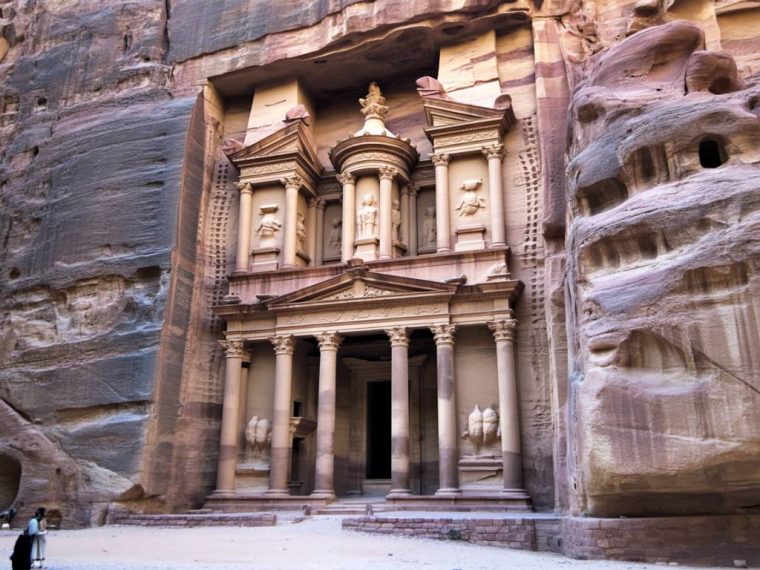
The Treasury—Al-Khazneh, with its intricate Hellenistic facade—reveals itself like a well-guarded secret. No image quite prepares you for how it glows at sunrise, or how the silence around it feels reverent, as if you’re standing before something sacred.
Must-See Sites Inside Petra
While the Treasury captures hearts, Petra’s true magic lies in its expanse. This isn’t a single site—it’s an ancient living city sprawled over 264 square kilometers. Think less quick photo stop, more all-day hike.
- The Street of Facades: A canyon-lined stretch of tombs and residences, these facades are your introduction to Petra’s architecture. Don’t rush—each crevice hides detail, history, and echoes of lives lived and lost.
- The Theatre: Carved from the living rock, this 7,000-seat venue shows how the Nabataeans blended Roman influence with local skill. Imagine performances under the stars, voices rising above the sandstone stage.
- The Royal Tombs: The Urn Tomb, Silk Tomb, and Corinthian Tomb are grand in scale and sentiment. Climb the steps and watch the city unfold below in a palette of ochre and blush.
- The Monastery (Al-Deir): Often overshadowed by the Treasury, Al-Deir requires a steep 800-step climb—but the summit view is worth every shaky breath. Larger than the Treasury and just as finely carved, the Monastery opens its arms to the sky. Bring water. And wonder.
- High Place of Sacrifice: For those who crave a more rugged route, this trail grants sweeping views across Petra and the Wadi Musa valley, along with an aura of solemn grandeur.
When to Visit for the Full Petra Experience
Petra can be both scorching and freezing depending on the season. Spring (March to May) and autumn (September to November) offer the most pleasant temperatures and golden desert light perfect for both photos and memories. Summer can be brutally hot by midday, while winter nights dip low into chill and frost.
If possible, aim for early morning entry. Not only will the Siq and Treasury be less crowded, the rising sun casts a hypnotic dance of shadows and light across the sandstone, illuminating Petra with a grace words can only attempt to capture.
Staying in Wadi Musa: Petra’s Modern Guardian
Wadi Musa, the town at Petra’s gate, is home to friendly Jordanians who are passionately proud of their heritage. Choose accommodations ranging from cozy guesthouses like Petra Guest House—hidden among boulders near the entrance—to eco-conscious lodges nestled further in the hills.
Don’t miss the chance to share tea with a local Bedouin family. Their stories breathe dimension into Petra, grounding the history with heart. If you’re lucky, they’ll sing you a gha’na while the fire flickers and the stars bloom above.
Petra by Night: A Journey into Stillness
Three evenings a week, Petra opens its arms under the stars. From 8:30 to 10:30 PM, the Siq and Treasury are illuminated by over 1,500 candles. You walk in silence, save for the soft crunch of gravel and distant strains of flute music. In that hush, Petra reveals another side—not golden and grand, but intimate, mysterious, reverent.
It’s not a show. It’s a feeling. A connection to those who once stood where you now walk, hearts full, eyes wide.
How to Make the Most of Your Visit
- Wear comfortable shoes: Petra is vast. Expect to walk between 10–20 kilometers depending on the trails.
- Hydrate: Desert sun waits for no one. Bring at least 2 liters of water and refill when possible.
- Hire a local guide: Many hidden symbols and stories remain unseen without a guide’s insight. Plus, you’re supporting local livelihoods.
- Bring cash: While entry fees can be paid by card, many stalls inside sell local crafts, food, and camel rides—and often only accept cash.
- Take your time: This isn’t a bucket-list tick. Let Petra unfold slowly—like the desert rose it is.
Petra’s Gentle Echo: Eco-awareness and Respect
Petra’s beauty is fragile. With over a million visitors passing through each year, conservation is crucial. Stick to marked paths, never climb on the monuments, and carry out all your litter. The site belongs not only to Jordan, but to humankind.
Support local artisans buying authentic jewelry or handwoven keffiyehs, and avoid mass-produced trinkets. Each purchase can be an act of preservation and connection.
Why Petra Will Stay With You
Petra isn’t just seen—it’s felt. In the silence of the canyons, in the flicker of candlelight, in the dusty embrace of time, it leaves its mark. The journey to Petra doesn’t end at its carved facades; it continues, quietly, with you—nestled somewhere between your ribs and your dreamscapes.
And maybe that’s the true wonder of Petra. That we arrive with guidebooks in hand and leave with something far less tangible: a whispered memory of stone turned to soul.