A Village on a Hill: The Enchantment of Montmartre
Perched above the restless heartbeat of Paris, Montmartre feels like a dream on pause. Its cobbled streets whisper stories of revolutionaries, poets, and painters who wandered these hills before us. Here, the city exhales a slower breath, and if you listen closely, you can almost hear the echo of an accordion drifting through time. Montmartre isn’t just a district — it’s a reverie carved in stone, crowned by the ethereal white silhouette of the Sacré-Cœur Basilica.
Coming to Montmartre is like stepping into a different Paris — improbably tranquil, sometimes surreal, often stirring. It’s a place where history and art embrace on every corner, and where the horizon offers a panoramic love letter to the City of Light. But behind its postcard façade, Montmartre holds a labyrinth of stories waiting to be unraveled.
The Sacred Heart: A Beacon and a Paradox
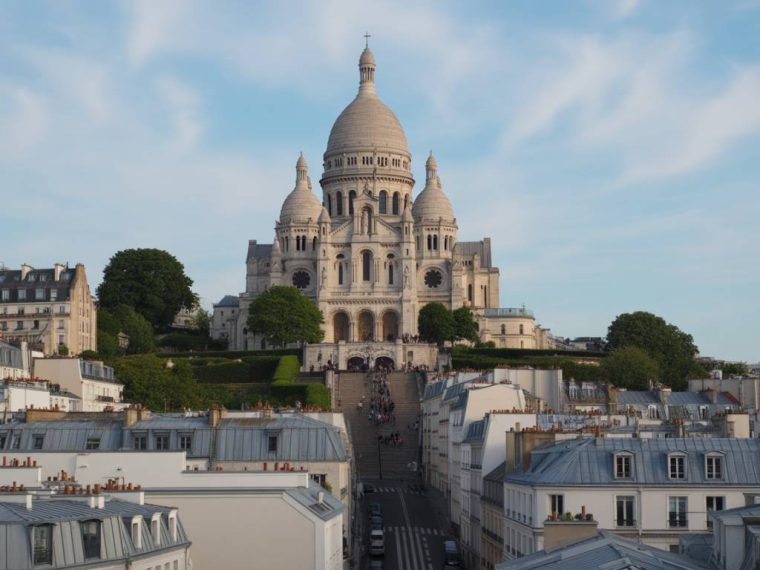
From any rooftop in Paris, it’s hard to miss it. The Sacré-Cœur Basilica, chalk-white and unshaken, rises from the summit of the butte like a watchful guardian. Built between 1875 and 1914, the basilica is more than a religious monument — it is a symbol of resilience, of national penance after the Franco-Prussian war, though not without controversy. While some view it as a sacred sanctuary, others see it as a political monument erected on the wounds of a rebellious Montmartre that once birthed the Paris Commune.
Yet, stepping inside, it’s all silence and soft reverence. Light filters through intricate mosaics and polished marble, curving over pews where pilgrims and wanderers alike find stillness. The dome — if you ascend its 300 spiraling steps — offers one of the most arresting views of Paris, especially at twilight, when the skyline blurs into gold and possibility.
The Soul of Bohemia
Long before the Sacré-Cœur crowned its peak, Montmartre was a village on the fringe — geographically and philosophically. At the dawn of the 20th century, the area ignited the imagination of artists fleeing the suffocating classicism of central Paris. In dimly-lit studios and smoky cafés, the likes of Picasso, Modigliani, and Toulouse-Lautrec birthed modern art while swapping absinthe-soaked dreams.
Strolling down Rue Ravignan or wandering into the Bateau-Lavoir, one of Picasso’s early haunts, you can still feel the echoes of this bohemian past. The walls, though now quietly residential or filled with boutique ateliers, seem to pulse with untold verses and forgotten brushstrokes. Even today, artists dot Place du Tertre, capturing faces and fantasies under parasols, perpetuating Montmartre’s eternal muse-like allure.
Panoramic Paris: A City Unfolded
There’s an alchemy in the air when you step onto the terraces around Sacré-Cœur. Below, the Parisian tapestry sprawls endlessly — rooftops glistening like wet ink drawings, the Eiffel Tower a distant exclamation mark against the skyline. Here, the city doesn’t just extend; it unfolds like memory.
If you’re lucky enough to arrive at dawn, the world feels freshly painted. Students from the nearby art schools gather with sketchpads; lovers, half-asleep, lean into the quiet; street performers tune guitars to a sleeping sky. And as the sun sinks, the scene transforms into something theatrical — a crowd hushed by beauty, the city twinkling like a secret being kept.
Hidden Corners and Quiet Marvels
While most tourists follow the crowded trail from the metro station to the Basilica, those willing to stray are rewarded abundantly. Venture down the winding Rue de l’Abreuvoir and you’ll stumble upon La Maison Rose, a pastel-pink café that feels like a still from a French New Wave film. Or seek out the unexpected calm of the Montmartre Vineyard — yes, a vineyard in the heart of Paris! — where vines have been cultivated since the Middle Ages and the annual grape harvest is still celebrated with carnivalesque flair.
A few steps away lies the tiny Musée de Montmartre, a sanctuary telling the neighborhood’s story through paintings, memorabilia, and garden benches once warmed by Renoir himself. There’s something delightfully intimate about pouring over love letters and sketches in the very house where art once breathed.
Moments to Taste: Food, Wine & Ambrosial Delights
Montmartre is as edible as it is photogenic. Its cafés hold both romance and resilience in their espresso cups. Begin a morning with a flaky croissant from Le Grenier à Pain on Rue des Abbesses — three-time winner of Paris’s best baguette. Let lunch linger at Le Consulat, where Van Gogh once brushed elbows with Monet, and order a confit de canard so tender it dissolves into the soul.
For an ambrosial soirée, let the red-curtained cabaret of Lapin Agile draw you in. This century-old haunt, beloved by Aznavour and Picasso, still hosts chanson performances that evoke a bitter-sweet nostalgia — the kind that makes you ache for moments you never lived.
Travel Tips for Savoring Montmartre
- Come early or stay late: The charm of Montmartre blooms when the day-trippers thin out. Early morning and twilight offer a more intimate experience.
- Bring your walking shoes: Montmartre’s soul lives in its staircases. Try the Rue Foyatier’s 222 steps for a cinematic climb or descend via the crooked alleys around Rue Lepic.
- Skip the main drag: The streets around Place du Tertre are bustling, but magic lingers in the shadows. Wander Rue Cortot or Rue Saint-Vincent to escape the crowds.
- Attend Mass at Sacré-Cœur: Whether for faith or atmosphere, the Gregorian chants during Mass offer a transcendent soundtrack to the Basilica’s grandeur.
- Respect the locals: Montmartre may glitter with romance, but it’s still home to many Parisians. A simple bonjour and a respectful pace go a long way.
A Living Canvas
There is something about Montmartre that lingers. Perhaps it’s the way the light catches the Basilica’s dome at dusk, or how each worn shutter tells a story that hasn’t quite been forgotten. It’s a place where the line between art and life blurs — where love letters are tucked into café tabletops, and every winding path seems to ask: “Where does one go when one follows the heart?”
In Montmartre, the answer doesn’t matter. What counts is the wandering — hands in pockets, eyes half-dreaming, heart attuned to history’s soft murmur. And when you leave, you’ll carry it with you — not just postcards or photographs, but a flicker of something deeper. A feeling. A fragrance. A song unsung, haunting, beautiful — much like Montmartre herself.