Why Community-Based Eco-Tourism Matters in Nepal
Nepal’s Himalayas are often imagined as a playground for elite mountaineers and hardcore trekkers. Yet, beyond the famous Everest Base Camp and Annapurna Circuit lies a quieter, more intimate way to explore the mountains. Community-based eco-tourism invites travelers into village life, sharing both the beauty of the region and the responsibility of protecting it.
This approach is simple in concept but powerful in impact. Travelers stay in local homes or small community lodges. They eat regional food, walk traditional routes, and pay fees that are transparently reinvested in the village. The result is a model that seeks to balance income generation with cultural preservation and environmental care.
For visitors, it offers something different from the standard lodge-to-lodge or teahouse trek. It is slower. More grounded. Often, more challenging emotionally than physically, because it asks you to engage, listen, and adapt.
What “Community-Based” Really Means in the Himalayas
Community-based eco-tourism in Nepal is not just a marketing label. It usually refers to tourism initiatives that are owned, managed, and largely operated by local residents, often through cooperatives, women’s groups, or village committees.
Several elements typically define these projects:
- Local ownership: Guesthouses, homestays, and guiding services are run by families or community groups, not outside companies.
- Shared benefits: A portion of the income is set aside for village-wide projects such as clean water systems, school improvements, or trail maintenance.
- Cultural respect: Visitors are introduced to local customs, religious practices, and agricultural life in a way that aims to be respectful and reciprocal.
- Environmental focus: Villages commit to practices such as waste reduction, reforestation, or alternative energy, with tourism income helping fund these initiatives.
In practical terms, this might mean eating vegetables grown in the terraced fields you walked past that morning, sleeping in a mud-and-stone house powered by a small solar panel, and leaving a village knowing your stay helped repair a trail or fund schoolbooks.
Key Regions for Village-Based Eco-Treks
Nepal offers a growing network of such community-focused trekking routes. Some are close to Kathmandu. Others stretch into remote valleys where tourism is still relatively new.
Ghale Gaun and the Mid-Hills of Lamjung
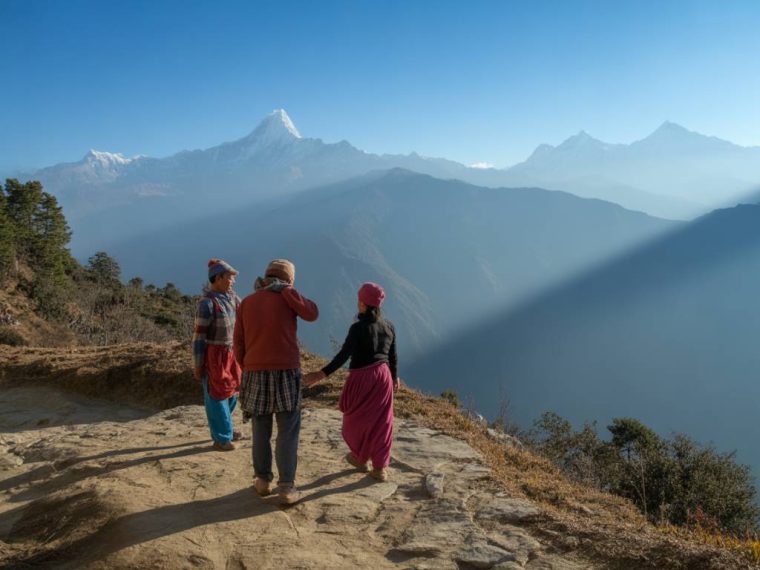
Ghale Gaun, in the Lamjung district, is often highlighted as a model for community-based tourism. Perched on a hillside with views of Annapurna and Lamjung Himal, the village is home to the Gurung community, known for its strong cultural traditions and military history in the Gurkha regiments.
Here, a cooperative system manages homestays and allocates guests in a rotation, so income is fairly distributed among families. Rooms are simple but clean. Meals revolve around rice, lentils, seasonal vegetables, and sometimes local chicken. The hospitality feels personal, yet organized.
- Short village walks reveal terraced fields, community forests, and viewpoints perfect for sunrise photography.
- Cultural evenings may feature traditional Ghatu or Sorathi dances, performed by local women and youth groups.
- Fees collected from visitors help support school repairs, trail maintenance, and environmental education programs.
Treks here are generally low-altitude and accessible. They are an appealing option for travelers who want a Himalayan experience without the demands of high-altitude trekking.
Helambu: Close to Kathmandu, Deep in Culture
Just north of Kathmandu, the Helambu region provides a convenient introduction to village-based trekking. Despite its proximity to the capital, Helambu still has a distinctly rural character. Trails pass through forests of rhododendron and pine, orchards of apple and peach, and clusters of stone houses and monasteries.
Community-based projects in Helambu often focus on:
- Homestays in Sherpa and Hyolmo villages.
- Local guides who share stories of Buddhism, migration, and mountain life.
- Reforestation initiatives in areas affected by landslides and deforestation.
Staying with a family here can be an eye-opening experience. Mornings may start with butter tea or simple black tea. You might help shell beans in the courtyard or watch children walk down steep, stone steps to reach school. The pace is unhurried. The trek becomes less about distance covered and more about time shared.
Chepang Hill and Lesser-Known Villages
For travelers seeking quieter paths, the Chepang Hill region between Chitwan and the central hills offers another perspective. The Chepang people, historically marginalized and semi-nomadic, have begun to engage in community-based tourism as a way to secure livelihood while maintaining their cultural identity.
Routes here are relatively short but can be steep. The rewards are wide, open views across rolling hills, glimpses into distinct Chepang traditions, and a very low visitor density.
- Homestays may be extremely basic, with limited electricity and simple bedding.
- Guides from the community explain local farming techniques, forest use, and traditional beliefs.
- Income from tourists helps fund health outreach and education campaigns, which are vital in these under-served areas.
This is not a polished, “packaged” tourism experience. It can feel raw and unfiltered. For that reason, it tends to attract travelers comfortable with rustic conditions and open, respectful curiosity.
How Community-Based Eco-Tourism Supports the Environment
The Himalayas are fragile. Trails erode quickly. Forests are easily degraded by overharvesting of wood. Waste, especially plastic, accumulates in regions where municipal services are limited or absent.
Community-based eco-tourism responds to these challenges in several ways:
- Incentives for conservation: When communities see direct financial benefits from healthy forests and clean trails, they have more reason to protect them.
- Funding for local initiatives: A small trekking fee can be pooled to build biogas systems, improve water taps, or set up waste collection points.
- Education and awareness: Tourism committees often run environmental awareness programs in schools and village meetings, connecting income from visitors with the need to care for the landscape.
Travelers who participate in these treks contribute simply by showing up and paying fair prices. They can also amplify the impact by following low-impact travel practices. Carrying out their trash. Using refillable water bottles with filters or purification tablets. Avoiding single-use plastics and unnecessary packaging.
The Social and Cultural Dimension
Spending nights in village homes changes the typical dynamic between host and guest. It is more conversational. Less transactional. You eat at the same table as the family. Sometimes, you help in the kitchen or in the fields for an hour, simply to learn.
This kind of proximity creates both opportunities and responsibilities. Visitors gain:
- A richer understanding of daily life in the Himalayas, beyond trekking routes and tourist towns.
- Firsthand insight into how climate change, migration, and globalization are affecting rural communities.
- Shared human experiences, from laughter over language gaps to quiet moments during evening prayers.
At the same time, travelers must be aware of their own impact. Respect for religious sites, modest dress in rural areas, and sensitivity when taking photographs are not just polite gestures. They are essential elements of a respectful exchange.
Preparing for a Community-Based Village Trek
A village-based eco-trek requires slightly different preparation than a mainstream teahouse route. Physical demands may be lower, but flexibility and adaptability become more important.
Consider the following when planning your trip:
- Choose a responsible operator: Work with local agencies or NGOs that are transparent about how money flows to the communities. Ask how homestays are chosen and how community funds are managed.
- Pack light but thoughtfully: Bring a warm sleeping bag liner, headlamp, and water purification system. These small items can make simple accommodation feel comfortable and reduce your environmental footprint.
- Learn basic phrases: A few words of Nepali, or local languages where possible, go a long way in creating connection. Simple greetings often open doors.
- Prepare for basic facilities: Squat toilets, bucket showers, and limited electricity are common. Approaching these conditions with patience and humor keeps the experience positive.
- Carry small, useful items: Instead of giving sweets or money to children, consider buying needed items locally. Notebooks, pencils, or soap purchased in village shops support the local economy without fostering dependency.
Travel insurance, proper footwear, and season-appropriate clothing remain important. The mountains can still surprise you with rain, cold, or rough terrain, even on community trails.
When to Go and What to Expect Season by Season
Timing shapes your experience. In Nepal, two main trekking seasons dominate: pre-monsoon (March to May) and post-monsoon (late September to November). Each has a distinct character.
- Spring (March–May): Hillsides bloom with rhododendrons. Days are warm. Visibility can be hazy in lower altitudes, but the villages are vibrant with agricultural work.
- Autumn (late September–November): Clear skies and crisp air make for excellent mountain views. Harvest season offers a window into traditional farming methods and festivals.
- Winter (December–February): Lower-altitude village treks remain possible, though nights can be cold. Fewer tourists mean quieter trails and more intimate encounters.
- Monsoon (June–August): Heavy rain, leeches, and slippery trails can complicate trekking, though some short routes in rain-shadow areas or lower hills are still viable with care.
Regardless of the season, it is wise to ask local guides about current conditions. Landslides, road construction, and infrastructure changes can alter routes from one year to the next.
Bringing the Experience Home
A community-based eco-trek in Nepal often lingers in memory not because of summits reached, but because of people met. A shared cup of tea by a smoky hearth. The quiet sound of chanting from a hillside monastery. The careful way a farmer explains the changing patterns of rain.
Supporting the Himalayas does not end when you leave the trail. Visitors can continue to make a difference by:
- Sharing honest accounts of their experiences to help responsible operators and communities gain visibility.
- Purchasing fair-trade handicrafts, tea, or textiles from cooperatives linked to the regions they visited.
- Staying connected with NGOs and projects that work in those villages, and offering support if it feels appropriate.
In a world where travel is often rushed and curated, community-based eco-tourism in Nepal offers an alternative path. One that is slower, more engaged, and deliberately supportive of the mountains and people who make these journeys possible.