
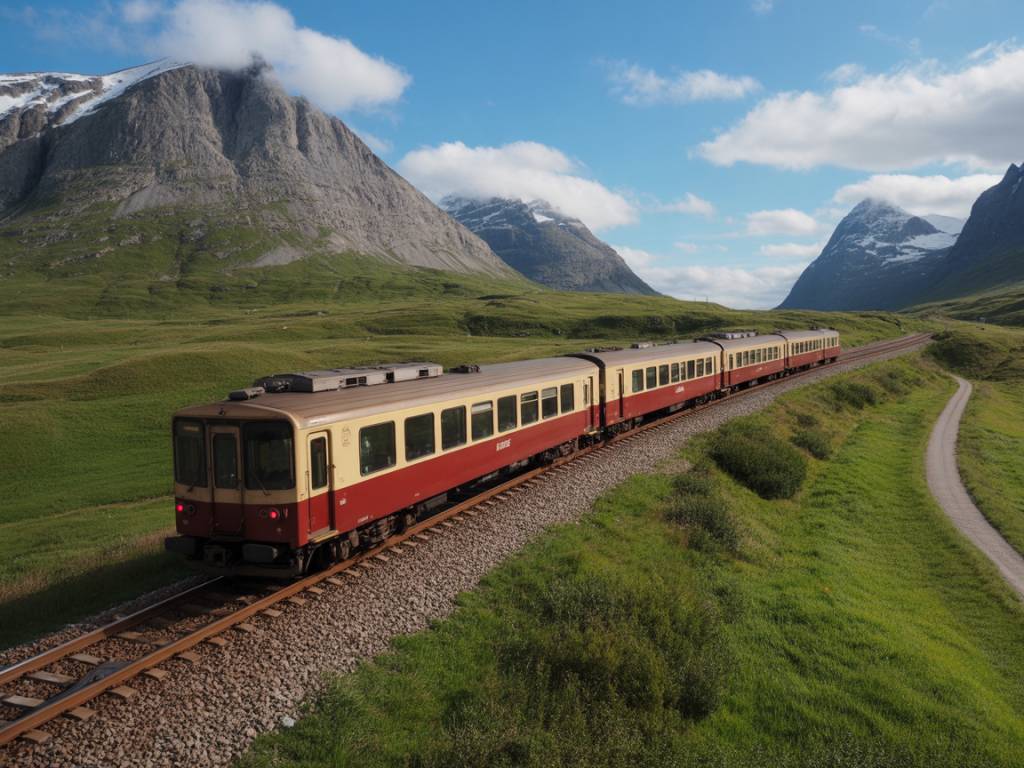
Rail travel has regained a strong place in European tourism. It is practical, comfortable, and often more scenic than flying. For travelers who want to reduce their environmental impact without giving up memorable views, trains offer a compelling alternative. Routes cross alpine passes, follow coastlines, and connect historic cities with remarkable ease.
What makes Europe especially attractive for rail journeys is the density of its network. Borders are relatively close, timetables are frequent on many routes, and a growing number of operators now invest in modern, lower-emission services. The experience can be slow in the best sense of the word. You watch the landscape change gradually, from vineyards to mountain valleys to seaside towns, and the journey itself becomes part of the trip.
Why rail travel stands out in Europe
Train travel is often one of the most sustainable ways to move between cities. Compared with short-haul flights, rail generally produces far fewer carbon emissions per passenger. That matters to travelers who want to make more responsible choices without sacrificing comfort or convenience.
There is also a cultural dimension. European rail stations are often located in the heart of cities, which reduces transfer time and allows easier access to hotels, museums, and neighborhoods worth exploring. The train experience itself tends to be more relaxed. There are no long security queues, fewer luggage restrictions, and more room to move around during the trip.
Scenic value is another major advantage. A good rail route does more than connect two points. It reveals terrain, architecture, and local life in a way that roads and airports rarely do. From panoramic windows, travelers can see glacier-fed rivers, medieval villages, dramatic cliffs, and rolling farmland unfold in real time.
Bernina Express, Switzerland and Italy
The Bernina Express is one of the most celebrated scenic rail routes in Europe. It links Chur in Switzerland with Tirano in Italy, crossing the Alps through a landscape of exceptional variety. The journey is famous for its engineering as much as for its beauty. Trains climb steep gradients, cross high viaducts, and pass close to glaciers and alpine lakes.
What makes this route especially memorable is the constant shift in scenery. The train moves from crisp mountain air to warmer southern valleys, and the transition is dramatic. Snow can appear in one section while palm trees line the road in another. Few rail journeys deliver such a clear sense of geographical contrast in such a short distance.
This is also a strong example of sustainable tourism in action. Instead of driving winding mountain roads, travelers can sit back and let the railway handle the difficult terrain. The result is less stress, lower emissions, and a deeper appreciation of the alpine environment.
West Highland Line, Scotland
Scotland’s West Highland Line is a classic route for travelers who value solitude, moody landscapes, and dramatic coastline views. It runs from Glasgow toward the northwest, eventually reaching Mallaig on the coast. Along the way, it passes through lochs, moors, and remote communities that feel far removed from urban life.
One of the line’s most photographed sections is the Glenfinnan Viaduct, where the train curves across a sweeping concrete structure surrounded by hills. The landscape is wild, spacious, and atmospheric. It can feel especially striking in changing weather, when sunlight and mist alternate quickly across the same view.
The route also offers a reminder that rail travel supports local economies in less accessible regions. Stations serve villages and small towns that benefit from steady visitor traffic. For travelers, that means the journey is not just beautiful. It also connects them with places that might otherwise be overlooked.
Rheingau and the Rhine Valley, Germany
Germany’s Rhine Valley is one of the most rewarding rail corridors in Europe for those who enjoy a combination of natural beauty and cultural heritage. The line between Koblenz and Mainz is especially popular, as it follows the river through castle-dotted hillsides, vineyards, and historic settlements.
This is a route where the scenery feels layered. You see the river first, then the terraced slopes above it, then the stone towers and fortresses that speak to centuries of regional history. Small towns appear and disappear along the banks, each with its own churches, waterfronts, and market squares.
The journey is short enough to fit into a broader itinerary, yet rich enough to stand on its own. Many travelers use it to connect different parts of Germany, but it is equally satisfying as a slow scenic ride with plenty of time to look out the window and take photographs.
Glacier Express, Switzerland
The Glacier Express is often described as one of the world’s most famous slow trains. It links Zermatt and St. Moritz, traveling across the Swiss Alps through deep valleys, high passes, and elegant mountain towns. Despite its name, it is not fast. That is exactly the point.
The train is designed for viewing rather than speed. Large windows frame a landscape of bridges, tunnels, forests, and snow-covered peaks. It is a route that rewards patience. Passengers have time to observe the subtle differences in light, topography, and settlement patterns as the train progresses.
For sustainability-minded travelers, it shows how rail can turn a long transfer into an immersive experience. Instead of rushing through the mountains, the Glacier Express allows the route itself to become the destination. It is an example of travel that feels unhurried without feeling inefficient.
The Douro Line, Portugal
Portugal’s Douro Line follows the Douro River through one of Europe’s most distinctive wine regions. The route begins in Porto and heads inland, with the landscape shifting from urban neighborhoods to terraced vineyards and steep riverbanks. It is one of the best journeys for travelers interested in food, wine, and scenery combined.
The appeal lies in the rhythm of the route. The train moves through a sunlit valley where the land has been shaped by centuries of agriculture. Vineyards climb the hills in carefully ordered rows. Villages rest close to the water. Bridges and stations feel integrated into the landscape rather than imposed on it.
This is a route that suits slower travel well. There is no need to rush. The train invites you to notice the details: the stone walls, the curves of the river, the color of the hillside in different seasons. For many visitors, it becomes one of the most memorable parts of a trip to northern Portugal.
The Cinque Terre Line, Italy
Italy’s Cinque Terre rail line is short, but it is among the most useful and scenic in the country. It connects five coastal villages along the Ligurian Sea, each with steep streets, colorful buildings, and direct access to hiking paths and beaches. The train is the easiest way to move between the villages, especially in peak season when roads are crowded.
The views are immediate and dramatic. One moment the train is in a tunnel, and the next it emerges beside the sea or into a small station above a harbor. Because the line is so closely tied to the geography of the coast, it helps protect fragile local areas by reducing the need for cars.
Travelers often combine the rail line with walking, which makes the trip both flexible and sustainable. It is a good choice for visitors who want to experience the region at a slower pace while avoiding the logistical strain that can come with driving and parking in narrow coastal towns.
Planning a sustainable rail trip
Choosing the right route is only part of the experience. Practical planning can make rail travel more enjoyable and more sustainable. Booking in advance often helps secure better fares, especially on popular scenic lines. It also reduces the likelihood of last-minute flight comparisons that can pull travelers away from rail options.
Travelers should also consider staying longer in each destination. Short city breaks are possible, but rail works best when it supports a more deliberate itinerary. A slower pace usually means fewer transfers, less packing and unpacking, and a stronger connection to local places.
Useful habits for a more responsible rail journey include:
- Choosing direct trains when available to reduce transfer stress and unnecessary energy use.
- Traveling light to make boarding easier and reduce logistical pressure.
- Eating at local restaurants near stations instead of relying only on chain options.
- Using public transport, walking, or cycling after arrival rather than renting a car immediately.
- Selecting accommodations close to rail hubs to minimize taxi journeys.
What to expect on board
European trains vary widely depending on the route and operator, but most scenic services are designed with comfort in mind. Some offer panoramic windows, reserved seating, dining cars, or observation areas. Others are simpler but still provide an excellent view and smooth ride. The quality of the journey often depends more on the route itself than on luxury features.
It is worth checking whether seat reservations are required. On many busy or premium scenic lines, they are. A window seat can make a noticeable difference, especially when landscapes change quickly. Snacks, water, and a charged device for photos are sensible additions, though many travelers find that the real advantage of train travel is being able to put the screen away and simply watch the scenery pass.
Rail travel in Europe is not only a transportation choice. It is a travel style. It encourages observation, patience, and a closer relationship with the places visited. For those seeking scenic and sustainable journeys, few options are as rewarding.