Where Silence Breathes: Exploring the World’s Cold Deserts
There’s a hush in cold deserts that speaks louder than a thousand voices. A wind that sings in nothingness, and skies so wide they seem to cradle your thoughts. Often overlooked, the world’s cold deserts are landscapes of stark, poetic beauty—and unexpected life. If you’ve ever craved adventure in places where frost kisses dunes and snow meets silence, this journey is for you.
What Is a Cold Desert, Exactly?
Unlike the scorching imaginings of endless sand and merciless sun, cold deserts defy expectation. Shaped by elevation, latitude, and rain shadow effects, they receive little precipitation—yet possess fiercely low temperatures. Think of them as Earth’s quiet rebels: barren, icy, and hauntingly cinematic. Their silence hides tales of creatures adapted to extremes, of ancient cultures, and of raw, untamed wilderness.
Atacama Desert, Chile: The Dryest Chill on Earth
Hovering high in northern Chile, the Atacama feels extraterrestrial. It hasn’t seen rain in centuries in certain places, yet temperatures plunge drastically once the sun sets behind the ragged Andean skyline. The ground here crunches underfoot like breaking sugar crust and the wind carries the salt of ancient seabeds to your skin.
Stargazers flock to Atacama’s altitudes—and for good reason. With almost zero light pollution, the sky unveils the universe in breathtaking detail. You’ll feel suspended between galaxies and granite as you hike through Valle de la Luna, named aptly for its lunar resemblance.
Looking for more than stardust? The desert surrounds offer surreal sights like flamingo-dotted salt flats, geysers steaming into frosty dawns, and llama herders whose ancestral stories echo through thin, clear air.
The Gobi Desert, Mongolia & China: Windswept Solitude
The Gobi doesn’t whisper—it growls softly under your boots. Stretching across southern Mongolia and northern China, it’s not the icebox you might expect, but its chill seeps bone-deep, particularly during the long winters when snow dusts its ochre dunes.
Riding a camel across the Gobi as snow flurries catch in your scarf feels like stepping into a time-lost journey. Cold as it may be, this desert teems with life. Wild Bactrian camels, nimble ibex, and elusive snow leopards haunt the fringes of rocky escarpments, while golden eagles float above seeking movement below.
And then there’s the human warmth that cuts the cold. Nights spent in a Ger, warmed by yak-dung-fueled stoves, shared with herding families over salted milk tea and quiet laughter. Stories passed from generation to generation fold into the fabric of the place, making any visit deeply humbling. Where else could you traverse dinosaur-rich sands by day and trace constellations through a circular tent roof by night?
Qinghai-Tibet Plateau, China: Rooftop of the World
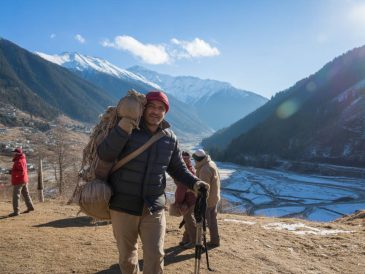
The cold here isn’t merely physical—it’s philosophical. Amid the vast sprawl of the Qinghai-Tibet Plateau, the desert doesn’t present itself as a singular expanse but in fragments: permafrost plains, gravel basins, and wind-torn alpine pastures that blur the lines between desert and sky.
This is a land blessed and burdened by height. At over 4,000 meters above sea level, breathing comes slower, and thoughts somehow feel weightier. Yet, life persists. The chiru, or Tibetan antelope, moves with graceful defiance, while marmots whistle their warnings across the snow-patched earth.
For adventurers, the plateau offers moments of transcendence: the hush of mountain monasteries, the rainbow flags fluttering from solitary stupas, the deep oaths of monks echoing against ancient stone. Here, the cold isn’t an obstacle—it’s a meditation.
Great Basin Desert, USA: Frost in the Wild West
When people think of Nevada, heat shimmers and casinos usually come to mind—not frost-gathered sagebrush under stars that burn diamond-white. But the Great Basin Desert bends all clichés. It’s North America’s largest cold desert, and its palette is one of snow-capped ridges, ghost towns, and the lingering scent of juniper smoke on the wind.
This is where solitude takes on a Western charm. Winter hikers can explore Lehman Caves in Great Basin National Park, where subterranean limestone sculptures mirror the frozen formations above. Or wander through bristlecone pine forests where trees older than time itself cling to windswept ridges—a sobering testimony to nature’s resilience.
And then there’s the wildlife: pronghorn scattered across open basins, wild horses grazing in the hollows of dry lakebeds, and coyotes whose howls ride moonlight like ancient ballads.
Antarctica: The Ice Desert Supreme
No mention of cold deserts is complete without Antarctica—the ultimate frontier. Its silence carries the weight of millennia, and its landscapes are both desolate and divine. Here, adventure is a deeper commitment—a voyage into the sublime extremes of the planet.
Despite appearing lifeless at a glance, the continent pulses with vitality. Emperor penguins huddled against katabatic winds, leopard seals slipping like shadows beneath turquoise ice, and massive pods of orcas whispering beneath floes. There’s nothing quite like kayaking among glacial giants with only the crack and groan of shifting ice to remind you that this place breathes—slowly, powerfully.
Visiting Antarctica is not for the faint-hearted, but for those who go, it becomes a part of their soul. It’s a place where boundaries dissolve: between land and sea, cold and warm, silence and song.
Why Choose Cold Deserts?
So, why should one venture into these frozen wilds when tropical paradises seem to beg for attention? Because there is profound beauty in minimalism. In the way cold air clears both skies and mind. In the interactions that stretch across language, warmed only by shared humanity beside a halfway-frozen fire. And in the simple joy of knowing you’ve reached a place few souls ever dare to wander.
Essential Tips for Visiting Cold Deserts
- Layer Smartly: Temperatures swing wildly between day and night. Merino base layers, windproof shells, and warm hats are your trinity.
- Hydration Matters: Cold can disguise dehydration. Drink often—even when you’re not thirsty.
- Respect Wildlife: Many animals in cold deserts are endangered and elusive. Observe quietly, from a distance.
- Travel Responsibly: These fragile ecosystems are delicate. Stick to marked paths, avoid disturbing lichen or moss, and pack out everything—always.
- Prepare for Altitude: Especially in Tibet and the Atacama, acclimate before exerting yourself. Headaches and nausea are signs to rest.
A Last Thought, as the Wind Shifts
Cold deserts don’t cater—they confront. They invite. They inspire. They dare us to look again, to slow down, to find beauty in barren spaces and warmth in seeming emptiness. If you’ve ever longed for a journey that touches something deeper than muscle or bone, these frozen lands are waiting—gloved hand extended, a trail of frost in its wake.
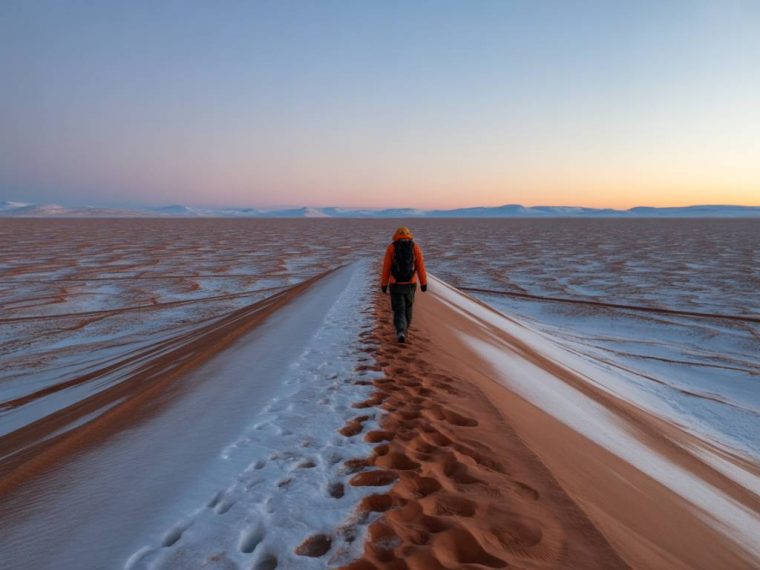
After all, some adventures aren’t loud. Some are whispered softly in the hush of snowfall on sand, in the heartbeat of hoofprints across tundra. Are you listening?